



Billing
Invoice care services precisely and in full.
Enterprise Application Integration meets AI
* This is only part of the capabilities we support.
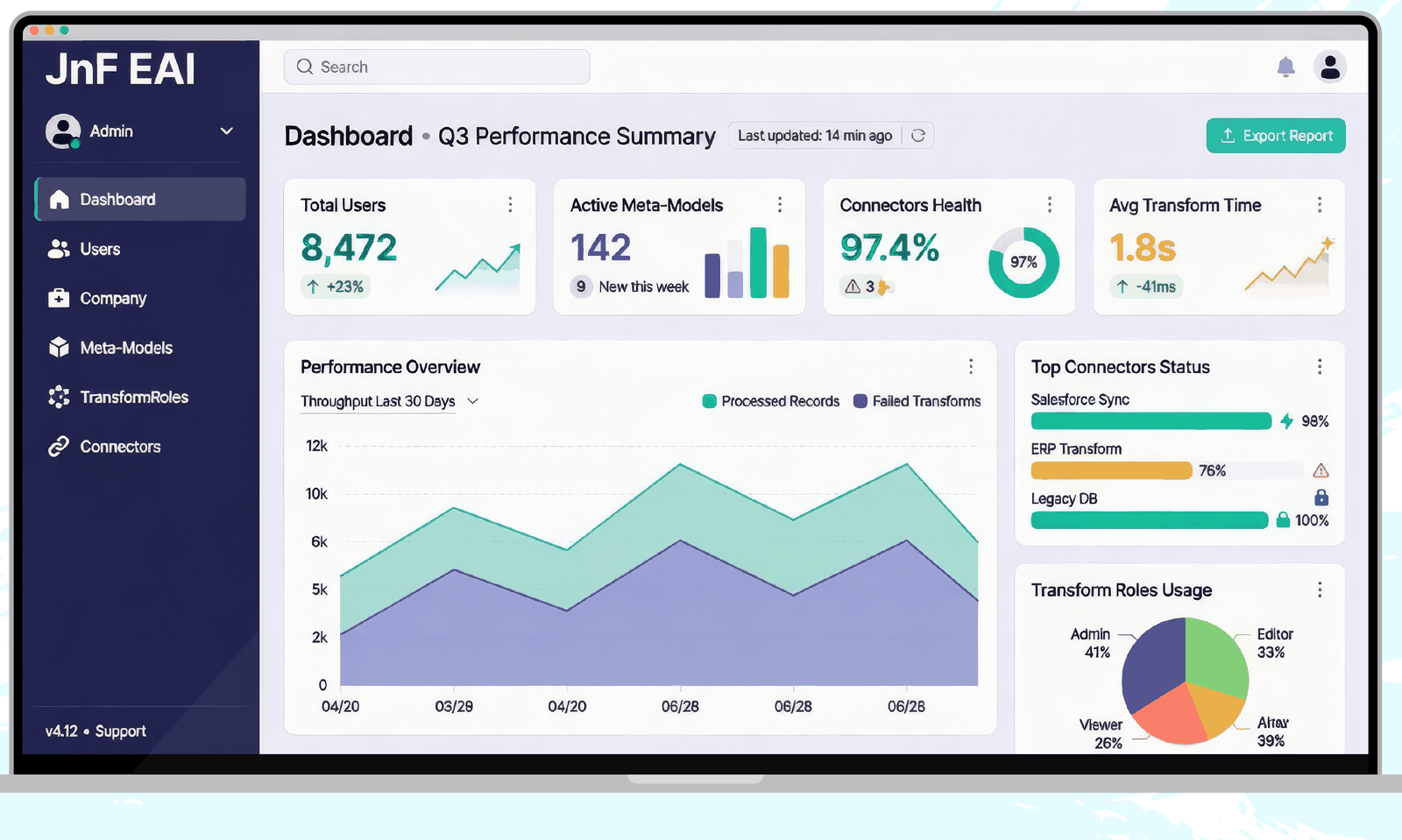
Faces a major challenge

Outpatient care organisations run a large number of specialised software products – which rarely talk to each other.
The result: administrative overhead that hits the bottom line directly.
Software landscapes without end-to-end connections and with many media breaks.
Error-prone hand-offs between systems, applications and documents.
Manual intervention delays invoicing and ties up liquidity.
The answer lies in connecting systems through a smart EAI
Profitability starts at the core – and so does our project. The ProFIT innovation project starts where the economic effect is felt most directly: in the central finance and billing processes of outpatient care.
Invoice care services precisely and in full.

Consistent posting logic without manual steps.

Reliable key figures for well-founded decisions.

Seamless connections between all systems.
Let's talk about your system landscape
Want to know which of your processes can be connected? Tell us briefly what you are working with – we usually reply within one business day.
This is certainly a project grant under the Program for the Promotion of Research, Innovation, and Technology—Pro FIT—
dies wird gefördert durch:

A prototype is being developed and field-tested that connects new data sources largely automatically. At its core are four components: a self-learning semantic schema recognition system that maps unknown data structures to a canonical domain model; self-configuring connectors; AI-supported entity resolution with drift detection; and a natural language analysis layer. Sensitive data is processed exclusively in a controlled, GDPR-compliant environment.
smartEAI is an AI-powered system for intelligent enterprise application integration (EAI) in heterogeneous enterprise environments. The goal is to eliminate data silos created by the variety of specialized software (ERP, CRM, fleet management, accounting), which hinder cross-organizational analysis and optimal resource utilization. Traditional EAI and ETL systems fall short in this regard due to manual configurations and rigid interfaces. The first area of application is outpatient care.